Keep watch over your renewable energy project.
Mobile surveillance platforms with AI-assisted detection and 24/7 human monitoring, set to watch laydown areas and active blocks after hours.
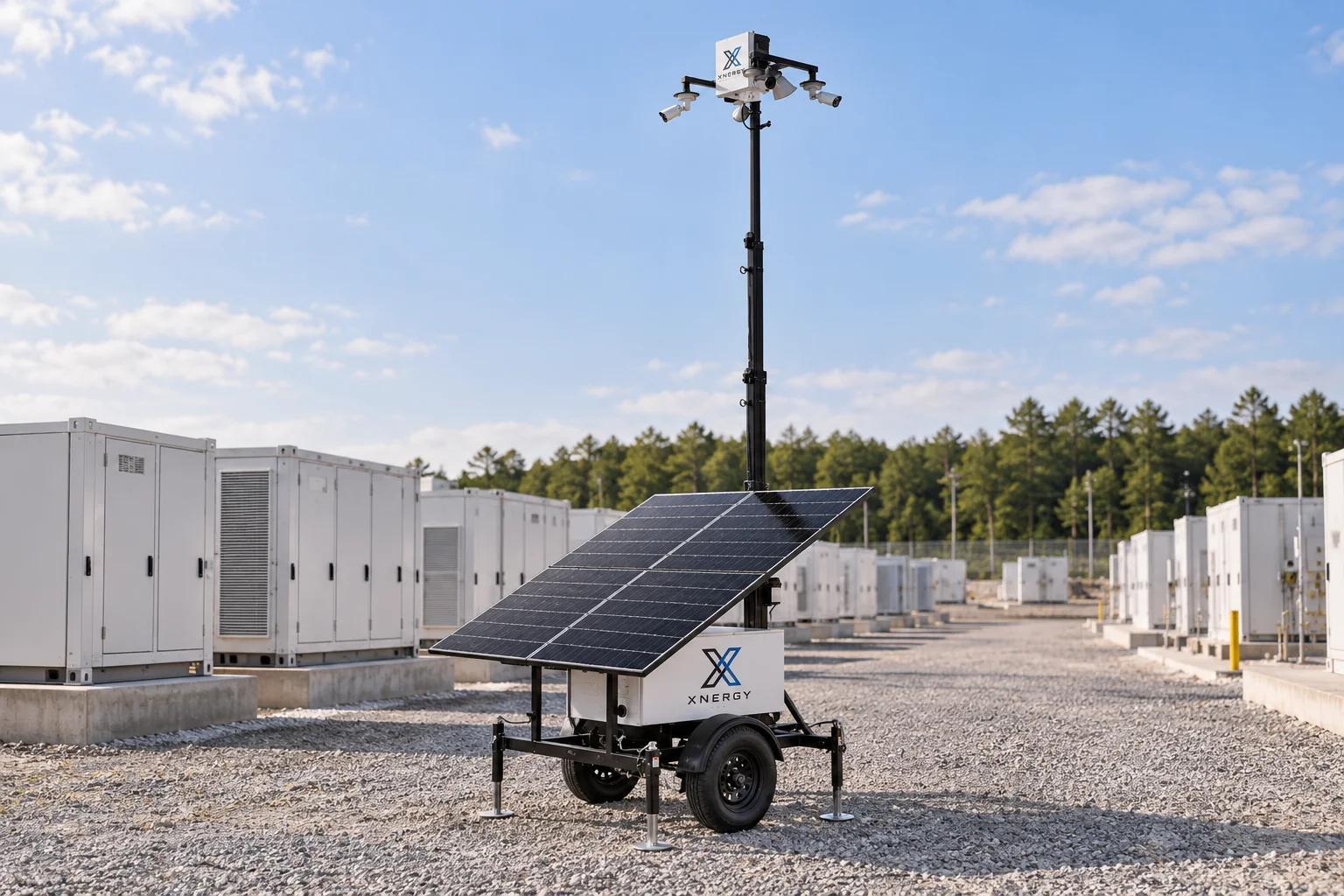
- Solar power option where conditions allow
- Repositioned as blocks progress
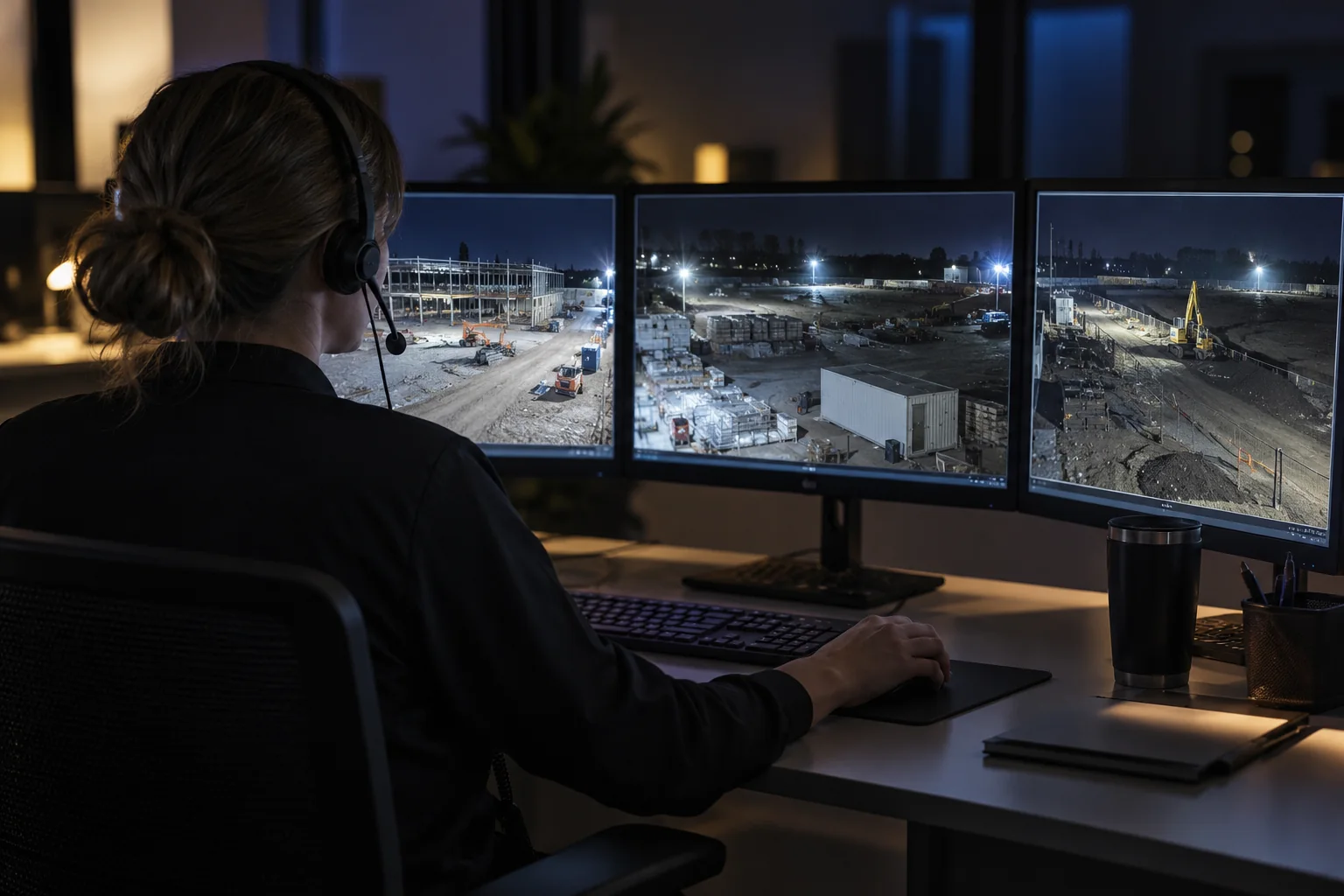
- Monitored by live operators
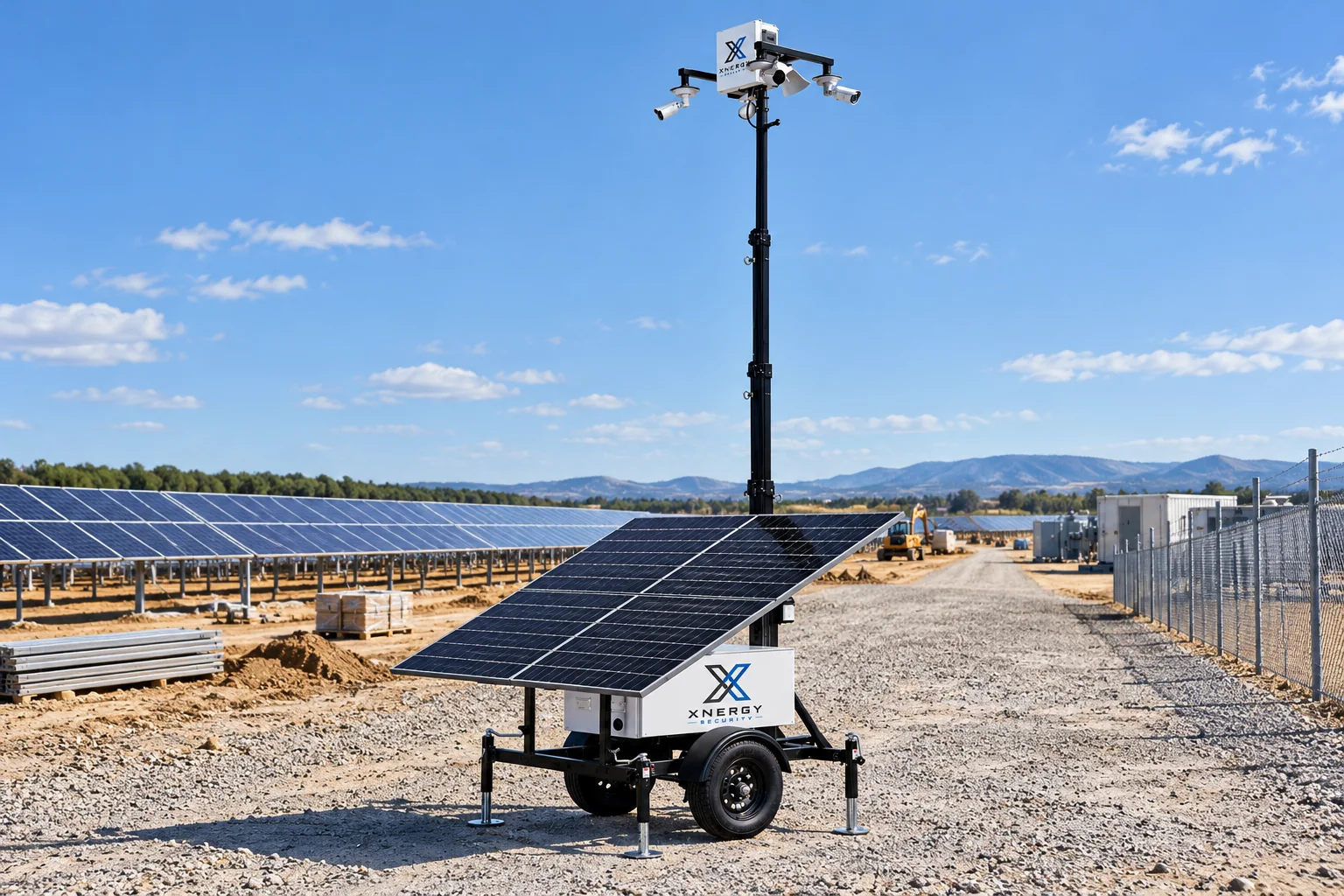
Useful when the site sits empty overnight.
Equipment staged for months
Modules, inverters, and wire sit in rows while blocks are built out.
Hard to cover on foot
Long perimeters and access roads take time to patrol and leave gaps between passes.
No site power yet
Since the plant is still being built, surveillance uses solar and cellular configurations suited to site conditions.
Schedule pressure to COD
Missing materials or damaged equipment can hold up planned work. Include high-priority deliveries and storage areas in the site review.
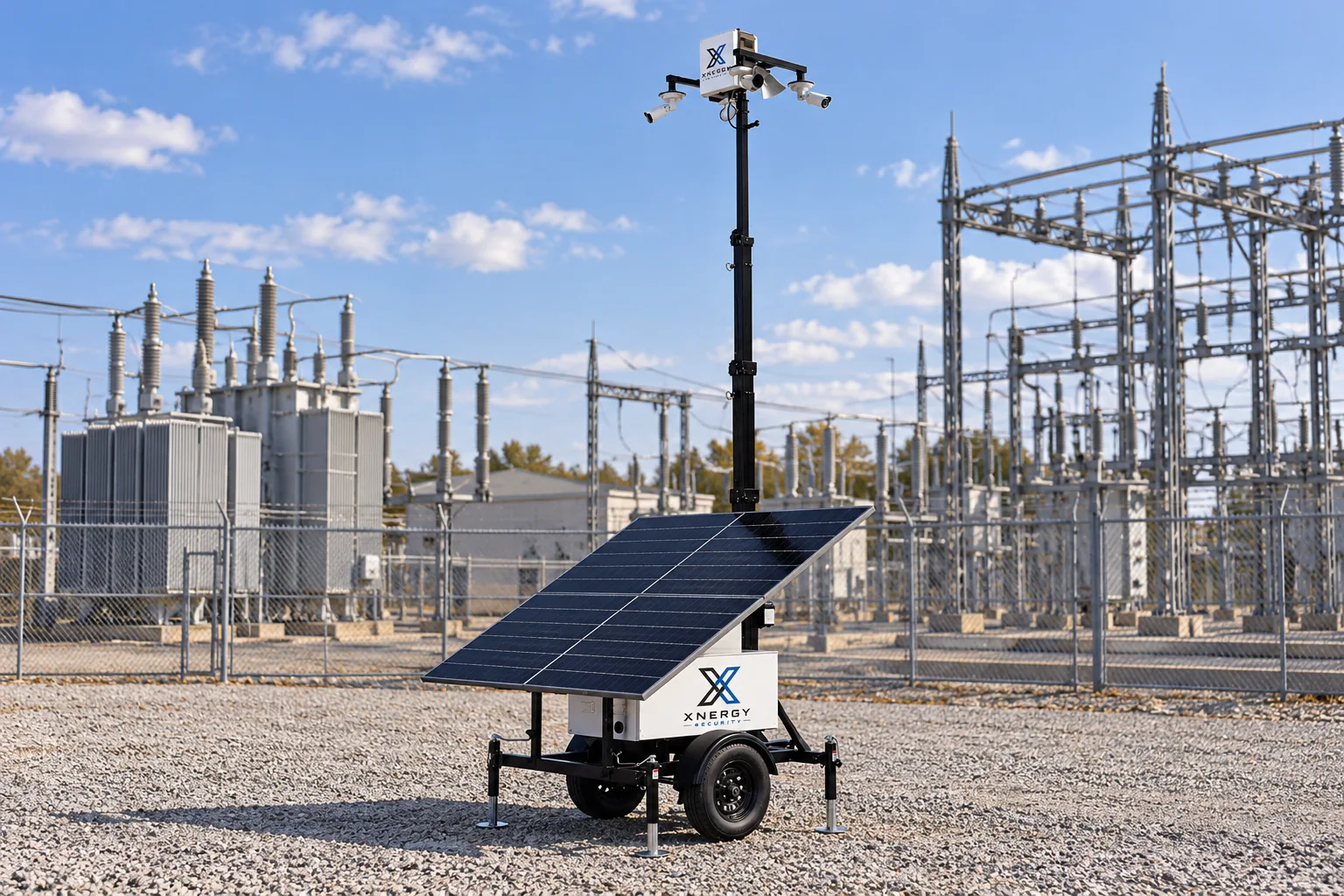
What happens after an alert?
- 01 · DETECT
AI-assisted detection flags activity inside the configured coverage areas.
- 02 · REVIEW
A monitoring operator reviews the alert with the available site context.
- 03 · INTERVENE
Remote voice intervention and notifications follow the agreed site protocol.
- 04 · ESCALATE
The response plan lists who is contacted and when physical response is needed.
Coverage that moves with the work.
Follows the build
Start at the laydown, then adjust camera placement as blocks and the substation come online.
Set for night hours
Discuss night visibility needs and mounting height at the assessment so placement fits the block layout.
No trenching for power
Solar and cellular configurations can avoid a fixed power run where site conditions allow. We’ll review sunlight, connectivity and equipment requirements.
Reviewed alerts
AI-assisted detection flags movement and a monitoring operator reviews it before further action.
Planned around your schedule
Recorded clips give the team something concrete to review after an overnight event. Ask about reporting and footage retention options.
Visibility without the drive
Remote review lets managers check overnight activity without driving out to the rows.
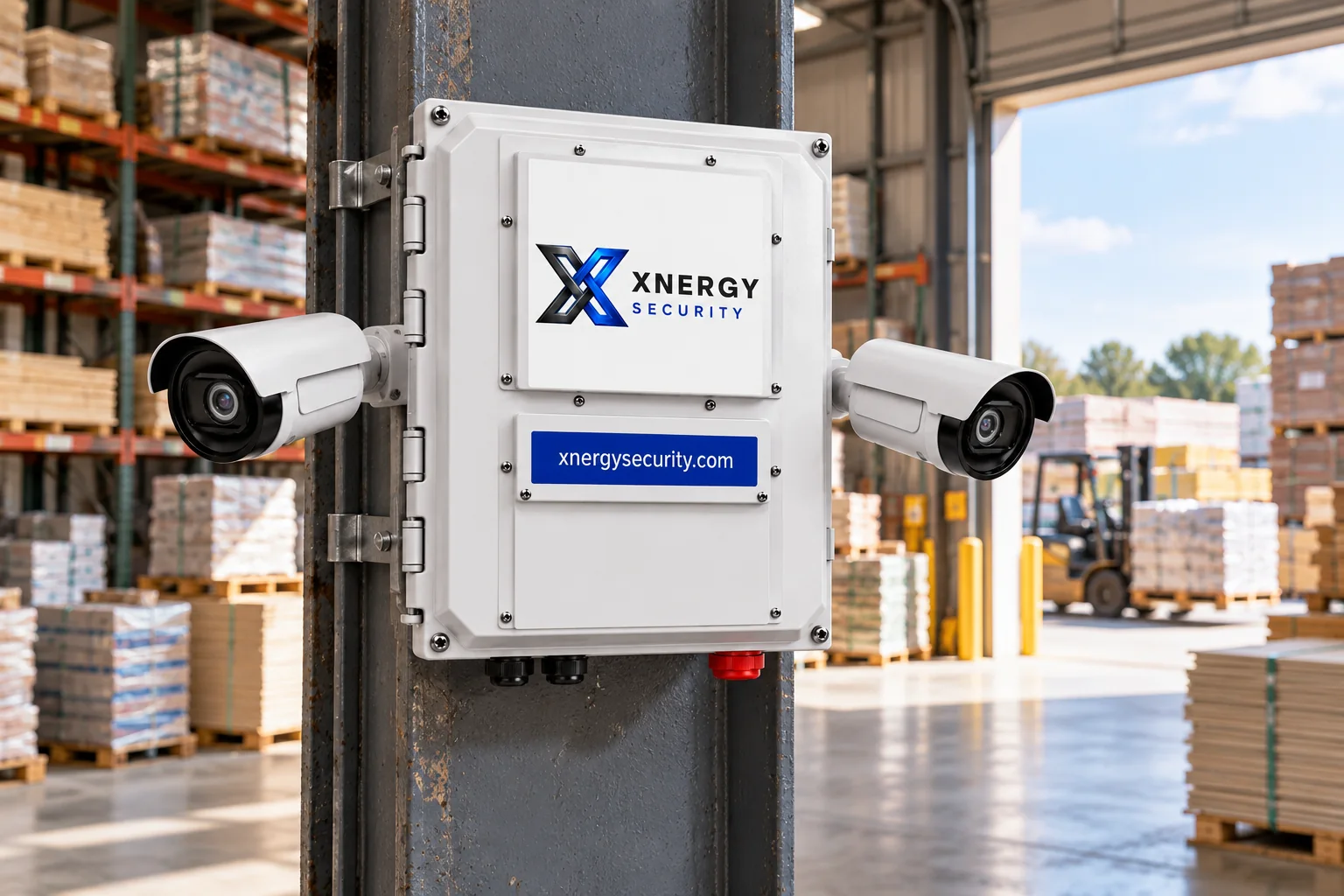
Compare guard hours with camera coverage.
Guards provide physical presence, patrols, and access control. Mobile surveillance provides remote review, voice intervention, and notification.
Request a site assessmentCompare scope side by side. Use your current guard schedule as a starting point while you review camera placement, monitoring, and duties that still need someone on site.
Common questions on solar sites.
Camera placement focuses on laydown areas, access roads, active blocks, and the substation, then shifts as phases change.
AI-assisted detection flags movement and a monitoring operator reviews the alert under the site protocol before acting.
Solar and cellular options are available. The assessment checks sun exposure, communications and power needs before recommending a configuration.
Monitoring provides remote voice intervention and notification under the agreed protocol. Your team retains physical response, and the assessment reviews who to contact and when.
Tell us whether you need coverage during construction, operations or both. We’ll review the scope, equipment and service options for each phase.
Surveillance covers remote review and notification while guards or staff keep patrol, access control, and on-site intervention. The assessment reviews which duties still need someone on site.
Send the site plan. Get a layout to review.
- Placement planned through COD
- Pricing by zone to review with the team
- Assessment of layout and timeline